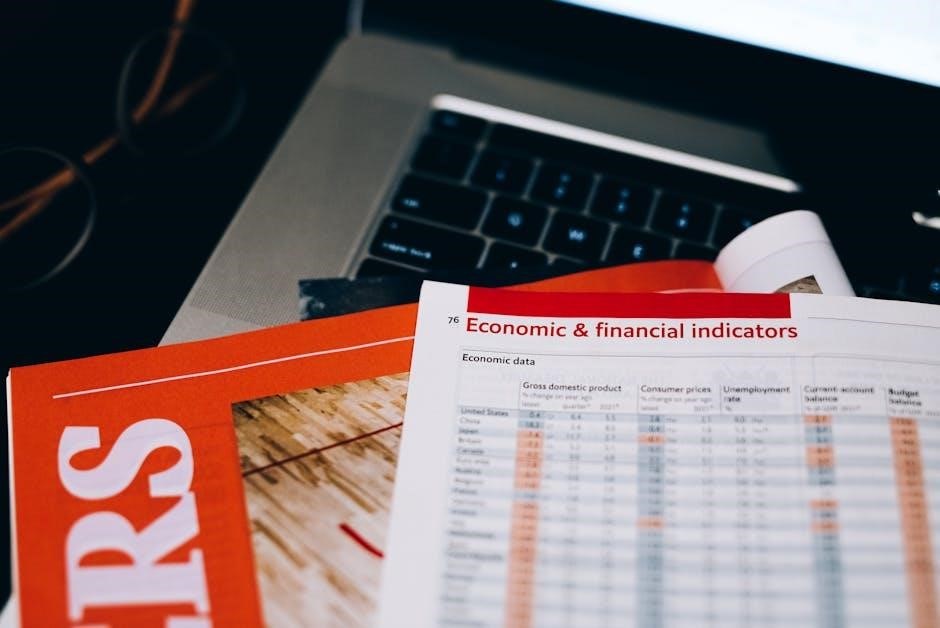
A Complete Guide to the Futures Markets (Updated November 12‚ 2025)

Futures markets offer a vital tool for managing price risk‚ especially for agricultural producers‚ and facilitate price discovery through contracts for future delivery.
Futures markets represent a cornerstone of modern finance‚ functioning as centralized exchanges where contracts for the future delivery of commodities‚ securities‚ or financial instruments are traded. These markets aren’t about immediate exchange; instead‚ they facilitate agreements to buy or sell an asset at a predetermined price on a specified future date.
This unique characteristic distinguishes futures from spot markets‚ where transactions occur instantly. Futures serve dual purposes: hedging‚ allowing producers and consumers to mitigate price volatility‚ and speculation‚ offering investors opportunities to profit from anticipated price movements. Understanding these dynamics is crucial for navigating the complexities of futures trading‚ and mastering risk management techniques is paramount for success.
II. What are Futures Contracts?
Futures contracts are legally binding agreements obligating the buyer to purchase‚ and the seller to deliver‚ an asset at a predetermined price on a specified future date. These are derivatives‚ meaning their value is derived from the underlying asset – be it wheat‚ crude oil‚ stock indices‚ or even cryptocurrencies.
Unlike traditional contracts‚ futures are standardized‚ detailing quantity‚ quality‚ and delivery date. This standardization facilitates trading on exchanges. Crucially‚ futures don’t typically involve physical delivery; most contracts are settled financially‚ with gains or losses calculated based on the price difference between the contract price and the market price at expiration. They are a powerful tool for both risk transfer and profit seeking.
III. Key Characteristics of Futures Contracts
Futures contracts possess unique characteristics distinguishing them from other financial instruments. Standardization ensures uniformity in contract terms‚ simplifying exchange trading. Leverage allows traders to control a large contract value with a relatively small initial investment‚ amplifying both potential profits and losses. This is facilitated by margin requirements – a good faith deposit representing a percentage of the contract’s value.
These margins are ‘marked-to-market’ daily‚ meaning gains are credited‚ and losses are debited from the account. This daily settlement minimizes counterparty risk. Understanding these features – standardization‚ leverage‚ and margin – is crucial for navigating futures markets effectively and managing associated risks.
III.A. Standardization
Standardization is a cornerstone of futures contracts‚ ensuring uniformity across all agreements for a specific commodity or financial instrument. This means contract size‚ quality‚ delivery dates‚ and delivery locations are predetermined by the exchange. Unlike over-the-counter (OTC) derivatives‚ futures aren’t customizable.
This standardization dramatically increases liquidity and facilitates trading. It allows for easy comparison of prices and reduces transaction costs. Because terms are fixed‚ futures contracts trade on organized exchanges‚ promoting transparency and fair pricing. This uniformity is vital for efficient price discovery and risk management within the futures market ecosystem.
III.B. Leverage
Leverage is a powerful characteristic of futures contracts‚ allowing traders to control a large position with a relatively small amount of capital. This magnification of potential gains (and losses) stems from the margin requirement‚ which is only a percentage of the contract’s total value. While offering substantial profit potential‚ leverage significantly amplifies risk.
For example‚ a small price movement can result in a large percentage gain or loss on the invested margin. Understanding and carefully managing leverage is crucial for successful futures trading. It’s essential to recognize that while leverage can enhance returns‚ it also exponentially increases the potential for substantial financial losses.
III.C. Margin Requirements
Margin requirements represent the amount of money a trader must deposit with their broker as collateral to cover potential losses in a futures contract. This isn’t the full contract value‚ but a percentage‚ showcasing the leverage inherent in futures trading. Initial margin is the amount required to open a position‚ while maintenance margin is the level that must be maintained.
If the account value falls below the maintenance margin‚ a margin call is issued‚ requiring the trader to deposit additional funds. Failing to meet a margin call can lead to the forced liquidation of the position. Understanding these requirements is vital for risk management and avoiding unexpected losses.
IV. How Futures Markets Function
Futures markets operate as centralized exchanges where contracts for future delivery are bought and sold. These exchanges provide a platform for price discovery and standardized contract terms. Clearinghouses play a crucial role‚ acting as intermediaries to guarantee contract fulfillment and manage counterparty risk. The mark-to-market process occurs daily‚ adjusting account balances based on price fluctuations.
This daily settlement minimizes risk‚ as gains and losses are realized immediately. Outside regular hours‚ futures on indices like the Dow‚ S&P‚ and Nasdaq offer insights for investment planning. These markets are essentially auctions‚ facilitating trading of commodities and securities.
IV.A. The Role of Exchanges
Futures exchanges are central to market function‚ providing a regulated and transparent platform for buying and selling futures contracts. They establish standardized contract specifications‚ ensuring uniformity and liquidity. These exchanges facilitate price discovery through open auction markets‚ where buyers and sellers interact to determine fair value.
Exchanges don’t guarantee contract performance; that’s the clearinghouse’s role. However‚ they oversee trading practices and enforce rules to maintain market integrity. They specialize in derivatives‚ contracts deriving value from underlying assets like commodities or securities. Access to these markets extends beyond regular hours‚ with futures offering insights for investment strategies.
IV.B. Clearinghouses and Risk Management
Clearinghouses are pivotal in mitigating counterparty risk within futures markets. They act as intermediaries‚ guaranteeing contract performance even if one party defaults. This is achieved through a rigorous process of margin requirements and daily mark-to-market settlements‚ ensuring financial stability.
The mark-to-market process adjusts accounts daily based on price fluctuations‚ requiring traders to deposit or withdraw funds to cover gains or losses. This minimizes accumulated risk. Clearinghouses also establish position limits and monitor trading activity to prevent market manipulation. They are essential for maintaining confidence and integrity in the futures ecosystem‚ fostering a secure trading environment.
IV.C. Mark-to-Market Process
Mark-to-market is a critical daily procedure in futures trading. It involves settling account balances based on the change in the futures contract’s price from the previous day. If the price moves favorably‚ the trader receives funds; unfavorably‚ they must deposit additional margin.
This process effectively realizes daily profits and losses‚ preventing substantial accumulation of risk. It ensures that potential losses are addressed promptly‚ reducing the likelihood of default; The daily settlement minimizes counterparty risk‚ a key function supported by clearinghouses. Traders must maintain sufficient margin to cover potential adverse price movements‚ safeguarding market stability and integrity.
V. Types of Futures Contracts
Futures contracts span diverse asset classes‚ offering varied trading opportunities. Agricultural futures‚ like wheat‚ corn‚ and soybeans‚ help manage commodity price volatility. Energy futures‚ including crude oil and natural gas‚ respond to global supply and demand dynamics.
Metal futures‚ such as gold‚ silver‚ and copper‚ often serve as safe-haven assets or industrial indicators. Financial futures cover stock indices and treasury bonds‚ enabling hedging and speculation. Increasingly popular‚ cryptocurrency futures—Bitcoin and Ethereum—provide exposure to the digital asset market. Each contract type possesses unique characteristics and risk profiles‚ catering to diverse investor strategies.
V.A. Agricultural Futures (e.g.‚ Wheat‚ Corn‚ Soybeans)
Agricultural futures are crucial for farmers and food processors seeking to mitigate price risk. Contracts for commodities like wheat‚ corn‚ and soybeans allow producers to lock in future selling prices‚ protecting against potential market declines. Conversely‚ buyers can secure supply at predetermined costs. These markets are heavily influenced by weather patterns‚ global harvests‚ and geopolitical factors impacting supply chains.
Trading volume is often highest around planting and harvest seasons. Understanding crop cycles and agricultural reports is vital for successful trading. These futures serve as a key price discovery mechanism for the agricultural sector‚ impacting food costs worldwide.
V.B. Energy Futures (e.g.‚ Crude Oil‚ Natural Gas)
Energy futures‚ encompassing crude oil and natural gas‚ are among the most actively traded contracts globally. These markets are highly sensitive to geopolitical events‚ supply disruptions (like OPEC decisions)‚ and shifts in global demand. Traders closely monitor inventory reports‚ weather forecasts (affecting heating/cooling demand)‚ and economic indicators.
Crude oil futures often reflect expectations about economic growth‚ while natural gas prices are heavily influenced by seasonal temperature changes. These contracts are essential for energy companies hedging against price volatility and for speculators seeking profit from price movements. Understanding the complex interplay of these factors is crucial for successful trading.

V.C. Metal Futures (e.g.‚ Gold‚ Silver‚ Copper)
Metal futures‚ including gold‚ silver‚ and copper‚ offer diverse trading opportunities driven by industrial demand‚ inflation expectations‚ and safe-haven appeal. Gold is often viewed as a hedge against economic uncertainty and currency devaluation‚ experiencing increased demand during times of crisis. Silver combines industrial uses with investment demand‚ making it more volatile.
Copper‚ a key industrial metal‚ closely tracks global economic growth‚ particularly in construction and manufacturing. Supply disruptions‚ mine closures‚ and shifts in global trade policies significantly impact metal prices. Traders analyze macroeconomic data‚ geopolitical risks‚ and inventory levels to forecast price movements in these dynamic markets.
V.D. Financial Futures (e.g.‚ Stock Indices‚ Treasury Bonds)
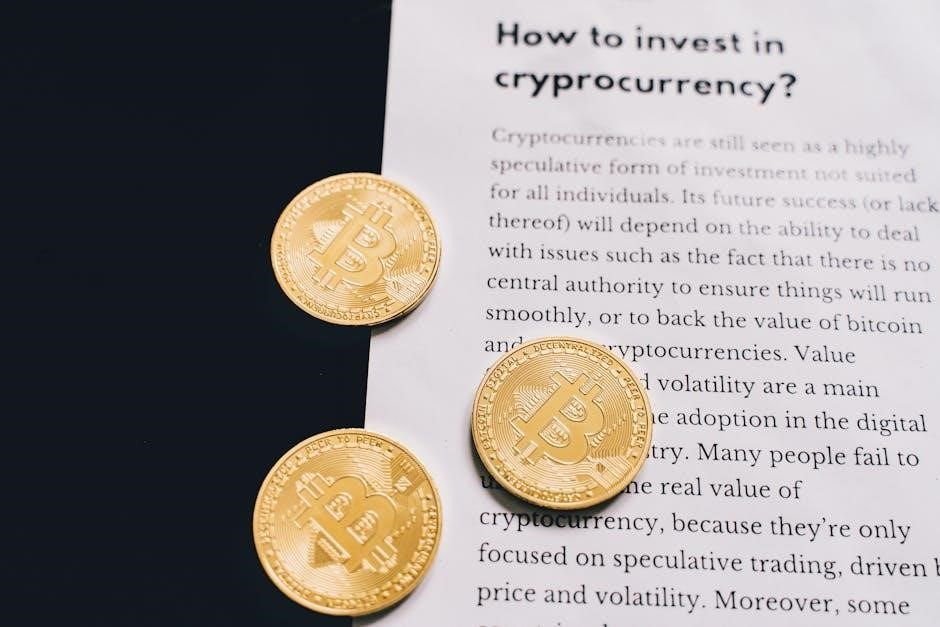
Financial futures encompass contracts based on stock indices like the S&P 500 and Nasdaq‚ as well as Treasury bonds‚ providing exposure to broader market movements. These instruments allow investors to speculate on or hedge against overall market risk without directly owning the underlying assets. Stock index futures are popular for portfolio diversification and managing equity exposure.
Treasury bond futures are sensitive to interest rate changes and economic data releases‚ offering a way to profit from anticipated shifts in the yield curve. These markets are highly liquid and attract institutional investors‚ traders‚ and arbitrageurs seeking to capitalize on price discrepancies.
V.E. Cryptocurrency Futures (e.g.‚ Bitcoin‚ Ethereum)
Cryptocurrency futures represent a relatively new but rapidly growing segment of the futures market‚ offering contracts based on digital assets like Bitcoin and Ethereum. These contracts allow traders to gain exposure to the volatile cryptocurrency market with leverage‚ potentially amplifying both gains and losses. They provide a regulated avenue for speculation and hedging‚ appealing to both traditional and crypto-native investors.

Trading crypto futures requires understanding the unique characteristics of these assets‚ including their 24/7 trading schedule and susceptibility to rapid price swings. Margin requirements and risk management are crucial due to the inherent volatility.
VI. Participants in Futures Markets
Futures markets attract a diverse range of participants‚ each with distinct motivations. Hedgers‚ like agricultural producers‚ utilize futures to mitigate price risk‚ locking in future prices for their commodities. Speculators aim to profit from price fluctuations‚ taking on risk by assuming positions based on market predictions. They provide liquidity to the market;
Arbitrageurs exploit price discrepancies between different markets or contracts‚ seeking risk-free profits. These participants contribute to market efficiency by ensuring consistent pricing. Understanding the roles of these key players is essential for comprehending the dynamics of futures trading.
VI.A. Hedgers
Hedgers are primary participants utilizing futures markets to reduce price risk associated with underlying assets. Agricultural producers‚ for example‚ employ futures contracts to lock in a selling price for their crops before harvest‚ protecting against potential price declines. Similarly‚ businesses relying on commodities can hedge against rising input costs.
This strategy doesn’t aim for speculative profit‚ but rather for price certainty. By offsetting potential losses in the spot market with gains (or limiting losses) in the futures market‚ hedgers stabilize their revenue streams. Effective hedging is crucial for business planning and financial stability.
VI.B. Speculators
Speculators are crucial for providing liquidity to futures markets‚ accepting price risk in hopes of profiting from price fluctuations. Unlike hedgers‚ they don’t have an underlying physical position in the commodity or financial instrument. Instead‚ they aim to capitalize on anticipated market movements‚ buying low and selling high (or vice versa).
Speculation can be highly leveraged‚ amplifying both potential gains and losses. While essential for market efficiency‚ it carries significant risk. Successful speculators possess strong analytical skills‚ market knowledge‚ and disciplined risk management strategies. Their activities contribute to price discovery and market depth.
VI.C. Arbitrageurs
Arbitrageurs play a vital role in maintaining market efficiency by exploiting tiny price discrepancies across different markets or related instruments. They simultaneously buy and sell an asset in different forms – for example‚ the spot market and the futures market – to lock in a risk-free profit.
This activity quickly corrects mispricings‚ ensuring consistent pricing across various exchanges. Arbitrage opportunities are often short-lived‚ requiring sophisticated technology and rapid execution. While profits per transaction may be small‚ the volume of trades can be substantial. Arbitrageurs enhance liquidity and contribute to fair value discovery within the futures ecosystem.
VII. Understanding Futures Pricing
Futures pricing differs significantly from spot pricing‚ reflecting expectations about future value. The spot price represents the current market cost of an asset for immediate delivery. Conversely‚ a futures price is an agreement to buy or sell an asset at a predetermined price on a specified future date.
Two key concepts govern futures pricing: contango and backwardation. Contango occurs when futures prices are higher than the expected spot price‚ often due to storage costs and interest. Backwardation happens when futures prices are lower‚ indicating strong current demand. Understanding these dynamics is crucial for informed trading decisions.
VII.A. Spot Price vs. Futures Price
The spot price embodies the immediate cost of an asset for instant delivery – what you’d pay right now to own it. Think of buying gasoline today; that price is the spot price. In contrast‚ the futures price represents an agreement to transact that same asset at a pre-determined price‚ but on a future date.
This difference stems from expectations. Futures prices incorporate anticipated supply and demand shifts‚ storage expenses‚ and interest rates. While often correlated‚ they aren’t identical. Traders analyze the spread between these prices to identify potential opportunities‚ recognizing that futures reflect market sentiment about what will happen.
VII.B. Contango and Backwardation
Contango describes a market where futures prices exceed the expected spot price. This typically occurs when storage costs are high‚ or there’s an anticipated future supply increase. Futures contracts further out in time are progressively more expensive‚ reflecting these costs. It’s a ‘normal’ market state‚ but can erode returns for those rolling over contracts.
Conversely‚ backwardation arises when futures prices are lower than the spot price. This signals immediate demand exceeding current supply‚ often due to short-term scarcity. Near-term contracts are pricier than distant ones. Backwardation benefits roll strategies‚ as traders sell expensive near-term contracts and buy cheaper future ones.

VIII. Trading Strategies in Futures Markets
Trend following capitalizes on established price directions‚ entering long positions in uptrends and short positions in downtrends‚ utilizing technical indicators to confirm momentum. Breakout trading seeks profits from price surges beyond defined resistance levels‚ anticipating continued movement in the breakout direction. Careful stop-loss placement is crucial.
Spread trading exploits price discrepancies between related futures contracts – for example‚ different delivery months of the same commodity. This strategy aims to profit from the convergence of prices‚ reducing directional risk. Mastering these strategies‚ alongside diligent risk management‚ is key to navigating futures markets effectively.
VIII.A. Trend Following
Trend following in futures markets involves identifying and capitalizing on established price directions. Traders enter long positions when prices are consistently rising‚ anticipating continuation of the uptrend‚ and short positions during sustained declines. This strategy relies heavily on technical analysis‚ utilizing indicators like moving averages and trendlines to confirm momentum and filter out false signals.
Successful trend followers require patience‚ discipline‚ and a robust risk management plan. Properly placed stop-loss orders are essential to limit potential losses if the trend reverses unexpectedly. It’s a strategy built on the belief that trends tend to persist for a considerable duration.
VIII.B. Breakout Trading
Breakout trading focuses on identifying key price levels – resistance and support – and anticipating significant price movements when these levels are breached. A breakout occurs when the price decisively moves above resistance or below support‚ signaling a potential new trend. Traders enter positions in the direction of the breakout‚ expecting momentum to carry the price further.
Confirmation is crucial; volume increases often accompany genuine breakouts‚ validating the move. False breakouts are common‚ so traders often wait for a retest of the broken level before entering‚ or utilize price action patterns. Risk management‚ including stop-loss orders‚ is vital to protect against failed breakouts.
VIII.C. Spread Trading
Spread trading involves simultaneously buying and selling two related futures contracts‚ profiting from changes in the price difference between them‚ rather than the absolute price level of either contract. This strategy can reduce directional risk‚ as the trader benefits from the relative movement of the contracts. Common spreads include inter-market spreads (e.g.‚ wheat vs. corn) and intra-market spreads (different delivery months of the same commodity).

Spread traders often analyze historical relationships and anticipate shifts in these relationships due to supply/demand factors. It requires understanding the correlation between the contracts and careful monitoring of the spread’s movement.
IX. Risk Management in Futures Trading
Risk management is paramount in futures trading due to the inherent leverage. Stop-loss orders automatically exit a trade when a specified price is reached‚ limiting potential losses. Position sizing – determining the appropriate contract quantity – prevents overexposure to any single trade. Diversification across different markets and contract types reduces overall portfolio risk.
Understanding margin requirements and the mark-to-market process is crucial; losses can exceed initial margin deposits. Regularly reassessing risk tolerance and adjusting strategies accordingly are vital for long-term success. Prudent risk management protects capital and enables sustained participation in futures markets.
IX.A. Stop-Loss Orders
Stop-loss orders are essential risk management tools in futures trading‚ designed to automatically limit potential losses. These orders instruct your broker to close a position when the price reaches a predetermined level‚ safeguarding against adverse price movements. Setting appropriate stop-loss levels is crucial; too tight‚ and normal market fluctuations may trigger premature exits. Too wide‚ and potential losses become excessive.

Different types of stop-loss orders exist‚ including market and limit stop-loss orders‚ each with unique characteristics. Utilizing stop-loss orders consistently is a cornerstone of disciplined futures trading‚ protecting capital and promoting long-term profitability.
IX.B. Position Sizing
Position sizing is a critical‚ yet often overlooked‚ aspect of risk management in futures trading. It involves determining the appropriate contract size for each trade‚ based on your risk tolerance‚ account size‚ and the volatility of the underlying asset. Overly large positions can quickly deplete capital during unfavorable market swings‚ while excessively small positions may limit potential profits.
A common guideline is to risk no more than 1-2% of your trading capital on any single trade. Carefully calculating position size ensures that losses remain manageable and allows for sustained participation in the futures markets. Proper position sizing is fundamental to long-term success.
IX.C. Diversification
Diversification is a cornerstone of prudent risk management in futures trading‚ mirroring its importance in other investment strategies. Spreading your capital across multiple‚ uncorrelated futures contracts – encompassing different asset classes like agricultural products‚ energy‚ metals‚ and financials – can significantly reduce overall portfolio risk.
By diversifying‚ you lessen the impact of adverse price movements in any single market. Avoid concentrating solely on one sector or commodity. A well-diversified portfolio can potentially smooth out returns and enhance long-term profitability‚ protecting against unforeseen market shocks and improving resilience.
X. Futures Market Hours and Access
Futures markets boast extended trading hours‚ offering accessibility beyond traditional stock market times. While specific hours vary by exchange and contract‚ many operate nearly 24 hours a day‚ with limited breaks. This continuous trading is facilitated by electronic platforms‚ allowing participation globally.
Outside regular hours‚ access to futures – like Dow‚ S&P‚ and Nasdaq futures – enables investors to build action plans before stock market open. Brokers provide access to these markets‚ often through online trading platforms. Understanding these hours is crucial for reacting to overnight news and global events impacting prices;
XI. The Impact of Economic Events on Futures Prices
Economic events significantly influence futures prices‚ creating both opportunities and risks for traders. Interest rate decisions‚ like those recently made by the Federal Reserve‚ can dramatically shift financial futures‚ impacting stock indices and Treasury bonds. Unexpected economic data releases – inflation reports‚ employment figures – also trigger price volatility.
Global events‚ such as geopolitical tensions or shifts in supply and demand‚ directly affect commodity futures (energy‚ metals‚ agriculture). For example‚ Oracle’s results can reignite fears about tech stocks‚ impacting Nasdaq futures. Staying informed about these events is crucial for informed trading decisions.
XII. Resources for Futures Market Research
Comprehensive research is paramount for success in futures trading. Real-time streaming rates are available through various financial websites offering comprehensive stock futures tables‚ covering global markets. News outlets provide coverage of economic events impacting futures‚ like interest rate decisions and company reports.
Beginner’s guides offer essential knowledge on contracts‚ leverage‚ and risk management. Utilizing these resources allows traders to build an Investing Action Plan‚ understand market dynamics‚ and navigate the complexities of futures trading effectively. Staying updated with market analysis is key to profitable trading.